
A weak proposal usually fails before the aircraft leaves the ground. In enterprise procurement, a pilot drone survey proposal is not a marketing document. It is a technical risk statement, an execution plan, and a decision-support framework that tells the client whether the survey can produce usable intelligence under real operating constraints.
That distinction matters most in mining, utilities, water, infrastructure, and government programs, where a pilot survey is often the gate between desktop assumptions and full-scale deployment. Buyers are not looking for generic claims about speed or innovation. They need evidence that the proposed survey design, sensor stack, control framework, and reporting workflow are calibrated to the actual project question.
What a pilot drone survey proposal must achieve
A pilot survey exists to reduce uncertainty before larger capital or operational commitments are made. That means the proposal should be written around measurable validation goals, not around flight hours or platform features alone. If the client is testing whether drone magnetics can resolve a structural trend, whether LiDAR can penetrate sparse vegetation and produce an engineering-grade terrain model, or whether multisensor data can improve utility detection confidence, the proposal has to state that objective in operational terms.
A strong document does three things at once. It defines what will be tested, explains how the test will be executed, and specifies what evidence will be used to judge success. Without those three elements, the pilot remains ambiguous, and ambiguity creates procurement friction.
Start the pilot drone survey proposal with the decision context
The opening section should identify the business and technical decision that the pilot will support. This is where many proposals lose technical evaluators. They begin by describing the drone fleet instead of the project constraint.
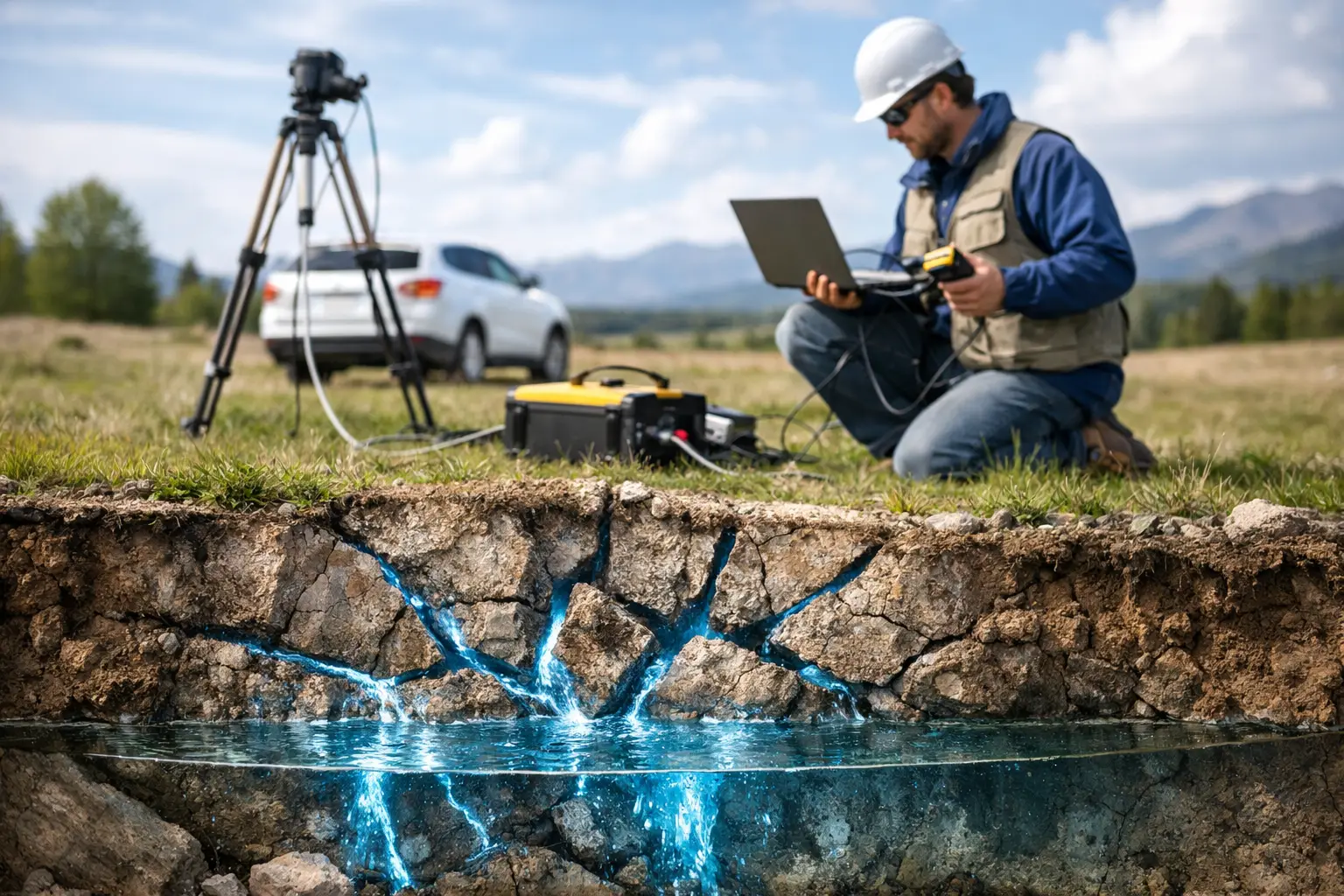
For an exploration manager, the relevant question may be whether a drone-borne magnetic survey can refine drill targeting over structurally complex ground. For a hydrologist, it may be whether integrated topographic and geophysical mapping can improve groundwater prospecting. For an EPC team, the issue may be corridor visibility, asset interference, or early-stage terrain intelligence for design optimization.
This section should be brief but exact. State the project environment, the operational challenge, the survey objective, and the decisions that depend on the output. If the proposal cannot connect the pilot to a downstream engineering, exploration, or planning decision, it will read as experimental rather than decision-grade.
Define scope with operational precision
The scope should specify the pilot area, terrain conditions, target depth or detection threshold where relevant, expected line spacing, sensor payload, control requirements, and proposed acquisition window. General language such as “site survey” or “data collection” is too loose for technical procurement.
A precise scope also makes trade-offs visible. Tighter line spacing can improve anomaly definition, but it increases flight time and processing load. Lower altitude can improve data resolution, but terrain relief, obstacles, and regulatory limits may affect safe execution. A proposal that acknowledges these constraints reads as engineered rather than promotional.
Scope should separate pilot objectives from full deployment objectives
This is especially important. A pilot is not intended to solve the entire project. It is intended to test whether a survey method, sensor combination, or processing workflow will perform to the required standard at scale.
That means the proposal should clearly distinguish between validation outputs and production outputs. In some cases, the pilot may only need to demonstrate signal quality, repeatability, and interpretation value over a limited block. In others, it may need to benchmark drone-derived results against legacy ground or manned-aircraft data. The level of effort should match the decision risk.
Specify the survey methodology in technical terms
The methodology section is where confidence is built. It should explain aircraft type, sensor payload, flight design logic, terrain-following strategy if applicable, base station or ground control configuration, calibration routines, and environmental limitations.
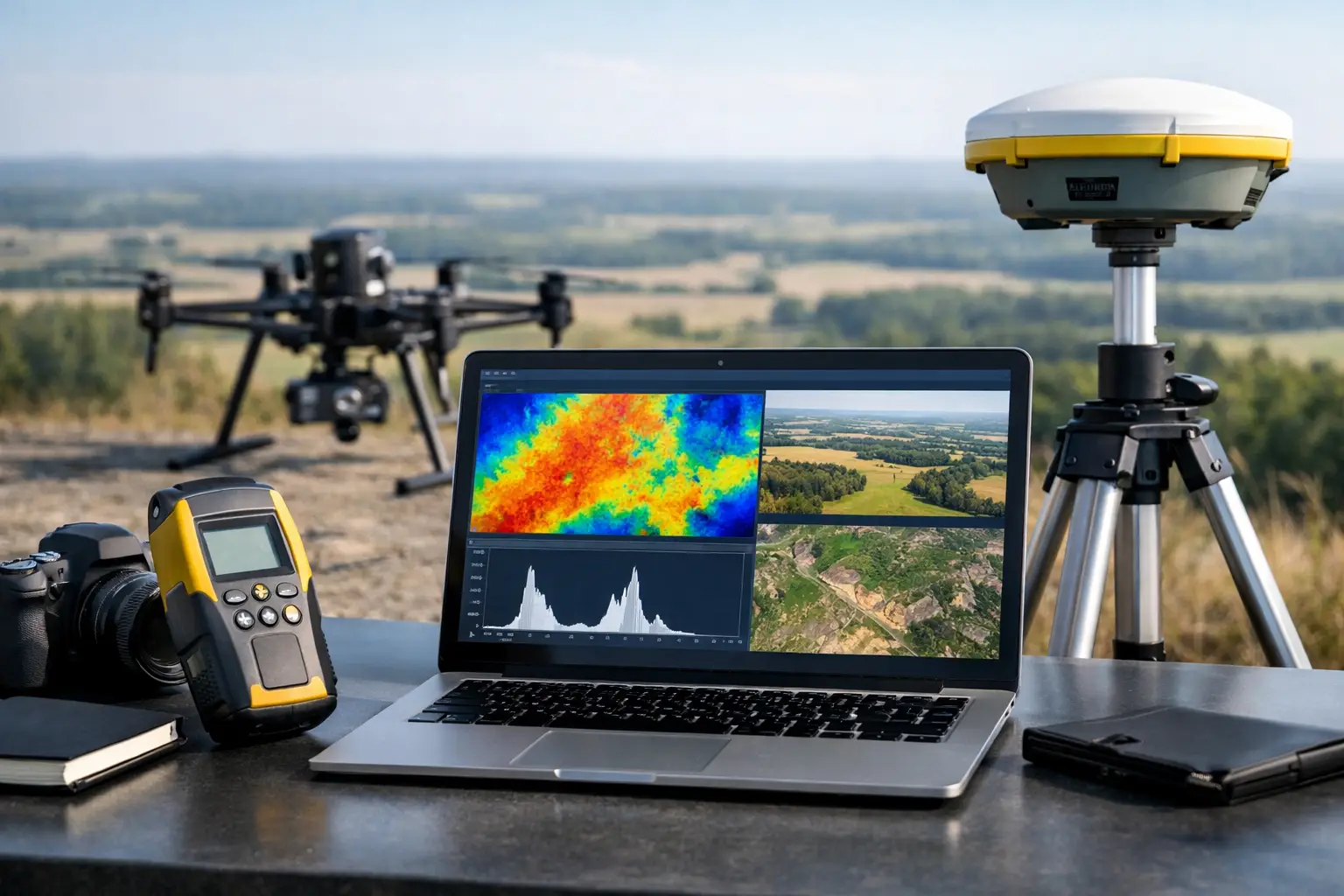
For geophysical work, the proposal should address compensation, heading checks, tie-line logic where relevant, and the expected approach to noise reduction and signal conditioning. For LiDAR or photogrammetry, it should define control density, positional accuracy assumptions, overlap strategy, and the expected classification or modeling outputs. For multisensor projects, it should explain how datasets will be co-registered and cross-validated.
This is also the right place to state what will not be attempted during the pilot. If the project conditions make certain interpretations premature, say so. Overpromising in the methodology section is one of the fastest ways to weaken a technical proposal.
Build QA/QC into the pilot drone survey proposal
Enterprise buyers do not just buy data acquisition. They buy traceability. A credible pilot drone survey proposal therefore needs a visible QA/QC framework from mobilization through final reporting.
That includes pre-flight checks, sensor calibration records, flight log retention, control verification, processing checkpoints, anomaly review procedures, and version control for deliverables. Where applicable, the proposal should also define acceptance thresholds such as positional accuracy bands, repeat-line consistency, noise tolerance, data completeness, or coverage percentages.
QA/QC should be tied to auditability
Auditability matters for procurement teams, regulators, technical reviewers, and internal project governance. If the pilot informs capital allocation, drill planning, route design, or resource targeting, the client must be able to defend the data lineage.
A disciplined proposal shows how raw observations move through processing, correction, interpretation, and reporting. That chain should be documented, not assumed. Companies such as Air Solutions compete well in this space because clients increasingly value interpreted, auditable outputs over unmanaged raw datasets.
Explain mobilization, permitting, and field constraints
Technical merit alone does not win fieldwork. The proposal should show that the operator understands access conditions, airspace restrictions, crew requirements, HSE controls, and environmental limitations.
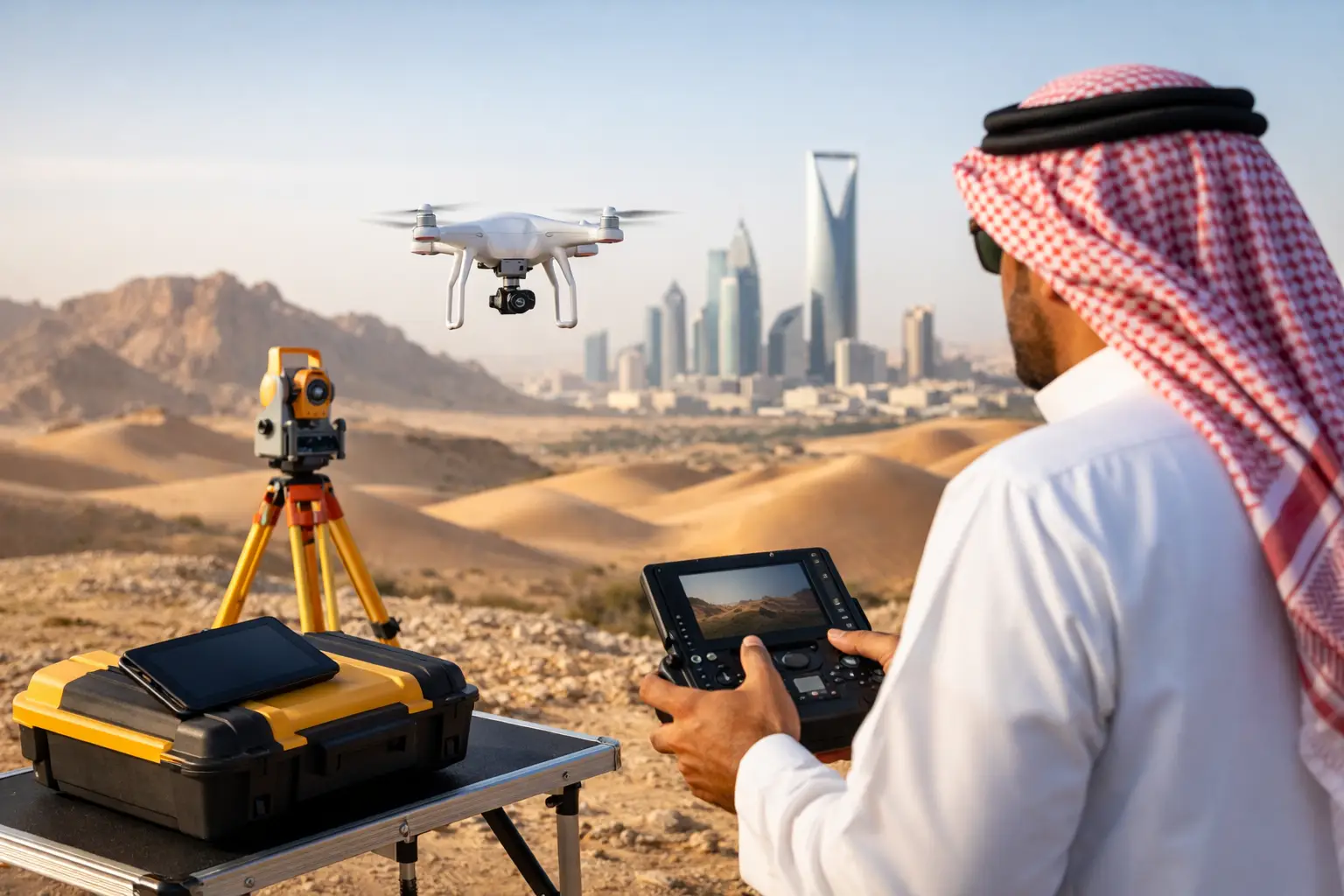
In desert and industrial environments, those constraints are material. Wind, heat loading, dust, magnetic interference, line-of-sight limitations, and site access protocols can all affect productivity and data quality. A serious proposal names the constraints and explains how they will be managed. That may include thermal operating limits, contingency flight windows, redundant equipment planning, or phased mobilization.
This section is also where schedule realism matters. A compressed timeline may be attractive commercially, but if it compromises control establishment, calibration, or repeatability, the proposal is setting the project up for rework.
Define deliverables as decision-grade outputs
One of the clearest signs of proposal maturity is the way deliverables are described. Buyers in industrial and public-sector environments rarely want unstructured data dumps. They want products that can be used by geologists, engineers, hydrologists, planners, and executive stakeholders.
That means the deliverables section should identify both data products and interpreted outputs. Depending on the survey type, this may include corrected geophysical grids, terrain models, orthomosaics, feature extraction layers, utility risk maps, anomaly targets, cross-sections, or integrated technical memoranda. If interpretation is part of scope, the proposal should define how findings will be ranked, qualified, and presented.
It also helps to state the file formats, coordinate reference system, metadata standard, and reporting structure. Those details reduce downstream friction for client GIS, geology, and engineering teams.
Show how success will be measured
A pilot without success criteria is difficult to approve and even harder to scale. The proposal should specify the technical and commercial benchmarks that determine whether the method is ready for wider deployment.
Those benchmarks may include signal-to-noise performance, correlation with known features, positional accuracy, coverage efficiency, anomaly detection confidence, or integration quality with existing datasets. In some cases, success is not proving that the drone method fully replaces a legacy method. It may be proving that it can narrow search areas, reduce ground time, or improve targeting enough to justify the next phase.
This is where nuance matters. Not every pilot delivers a simple yes-or-no outcome. Some show that the sensing method is viable but only under revised line spacing or a different payload configuration. Others confirm the platform but expose weaknesses in site control or environmental conditions. A good proposal leaves room for that reality while still defining a clear decision framework.
Price the work in a way that reflects risk and value
Pricing should align with the pilot purpose. If the proposal is framed as a validation exercise, the commercial model should reflect bounded scope, explicit assumptions, and clearly defined exclusions.
What matters most is transparency. Procurement teams want to know what is included in mobilization, field acquisition, processing, interpretation, revisions, and reporting. They also want to know what could trigger a change, such as expanded survey area, delayed site access, additional control requirements, or unexpected remobilization.
A low number with unclear assumptions is rarely persuasive in technical sectors. A better proposal shows exactly what the pilot will de-risk and why that de-risking justifies the spend.
Why the best proposals read like execution plans
The strongest pilot proposals do not sell the concept of drones. That argument is already old. They show that the operator understands the sensing physics, the site conditions, the reporting burden, and the client decision cycle.
When that is done well, the proposal stops being a generic bid document and becomes an operational blueprint for confidence building. That is what technical buyers respond to, especially when the next decision involves exploration capital, engineering design, infrastructure routing, or regulatory accountability.
If you are preparing a pilot drone survey proposal, write it so the client can see the field method, the controls, the limitations, and the value of the output before mobilization begins. That is usually the point where a proposal stops sounding ambitious and starts sounding fundable.